Workhorse Media's Chermayeff Goes Under the Big Top
The documentary director's PBS series "Circus" debuts, backed by a major network promotion campaign.


Workhorse Media's Chermayeff Goes Under the Big Top
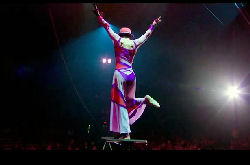
Filmmaker Federico Fellini once made a now famous analogy between the cinema and the circus. He likened both to the world's oldest profession, prostitution, because both know "how to give many kinds of pleasure." It should come as no surprise, then, that "Circus," the six-part documentary series on PBS created and directed by Maro Chermayeff and Jeff Dupre-which debuted in the US tonight-gives many pleasure in abundance.
"It's got it all," says Chermayeff, an independent documentary director who shoots commercials through Workhorse Media in Los Angeles. "It's got characters, storylines, tragedy, comedy, everything you need."
This is not your grandma's circus. Then again, in another sense, it is. The documentary series follows a season with the Big Apple Circus, a traditional European style one-ring circus (in contrast to three-ring). Chermayeff goes deep into the subculture of the circus in this program – what she calls the people with "sawdust in their blood" –from the back lot to the big top, moving from town to town, pitching tents, rehearsing and performing.
"We're not looking for the craziest, most insane thing we can do," says Chermayeff, "but we find it anyway. It's called real life and real people, and in the most normal of circumstances, the spectacular is revealed. All of our series are about characters and stories, and about finding people and capturing a world view that we otherwise wouldn't have an opportunity to become part of. Everyone has had that fantasy about running away and joining the circus. This hasn't changed in 40 years. This series, in a sense, is about the world of our past imaginings."
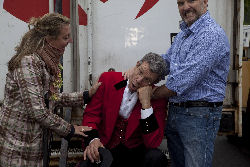
Chermayeff also created and directed the Emmy-award winning documentary series "Carrier," a ten-part PBS program about life aboard the nuclear-powered aircraft carrier USS Nimitz, and was a producer and director on several episodes of the PBS series "Frontier House," a sort of highbrow version of "Survivor" in which families were dropped into circumstances that resemble the American West circa 1883 and are forced to homestead.
Over the years, Chermayeff has collaborated closely with journalist and interviewer Charlie Rose, producing and editing many of his one-hour specials. She also was director of documentary programming at the US-based cable network A&E for two years, and was nominated for an Emmy for her work on the series "Biography."
The director currently has two films in the works with HBO's documentary division: she's directing "Mann v. Ford," an investigative piece about a toxic waste lawsuit brought by a New Jersey Indian tribe against Ford Motor Company (she calls it "my Erin Brokovich film"), and she's one of the creators and producers of a profile of the performance artist Marina Abramovich.
Chermayeff and Dupre pitched the Circus series to PBS several years ago. "It's not a children's show," she explains. "It's about the life of the circus and what it takes to make it in that world. We wanted to make an adult show about true life and real people."
The recession even makes an appearance in this series. The market crashed while she was shooting, and that underscored the precariousness of earning a living under the big top. The series, like most of Ms Chermayeff's work, does not have a narrator. In true cinema verité tradition, the stories are experiential or told in the voice of the subjects themselves. The idea is to get a sense of the circus from the circus member's perspective.
"In their mind, the circus is glorious," she remarks. "When you stand in the middle of the ring, you are surrounded by two thousand people. It's absolutely mesmerizing."
Chermayeff captured this visceral feel with a high speed Phantom HD camera, typically used on feature films. The series was shot at hundreds of frames per second, which helped push the film look into what the director calls "hyper-reality."
Chermayeff is a founder and chairman of the MFA Program in Social Documentary at The School of Visual Arts in New York City and a former faculty member of New York University's Graduate School of Film and Television. She's worked on branded content projects, and spent her formative years working on feature promotion at The Kanew Company, R/Greenberg Associates and Balsmeyer & Everett, where she cut trailers and helped produce movie ads.
She credits Workhorse EP Pola Brown and her colleague, documentary and spot director Brett Morgen, for inspiring her to get into advertising. "Brett always said to me, 'You have such a big esthetic sense.' And he's right -- I keep doing these behemoth things. They're like monster ad campaigns!"
Published 3 November, 2010


