Rogers on a roll
)
Steve Rogers, Co-Founder of Revolver and winner of shots Awards APAC 2025 Director of the Year, claims he’s not a fan of commercials. Lucy Aitken met him to find out how, on his quest to make ads that aren’t ‘annoying’, he’s shot some of the most popular spots of recent times.

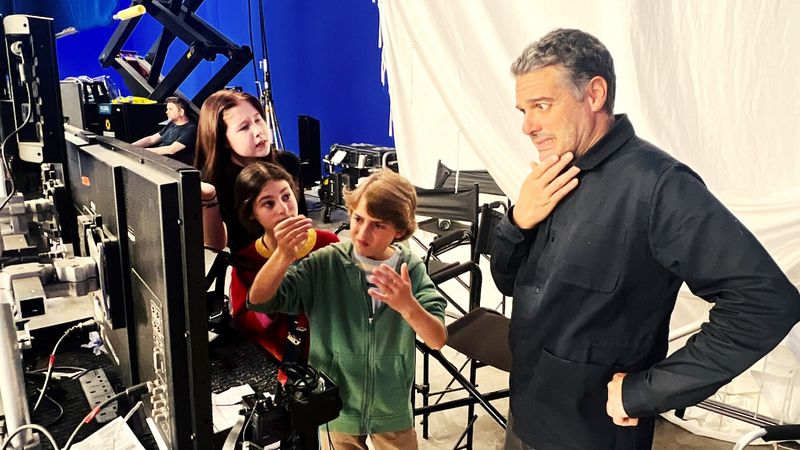
Steve Rogers, the director behind some of the most awarded ads of 2025, doesn’t like to tell people what he does for a living. “I just avoid the question and tell them I’m a schoolteacher,” he says, speaking to shots from his home in Sydney, cradling a glass of red wine.
Why do you tell people you’re a schoolteacher? “Commercials annoy most people,” he says in his characteristically blunt, no-nonsense way. “So I look for collaborators who are good at their craft. I look for people whose work I like and try to make stuff that has some empathy to it, whether it’s comedy or drama, or something surprising that feels like it hasn’t been told before.” There’s another crucial component: “And I look for scripts that aren’t going to be annoying.”
Commercials annoy most people.
His dedication to making ads that aren’t annoying is clearly paying off: Rogers had a barnstorming 2025. He took Director of the Year in the shots Awards in the Americas and Asia, as well as at Cannes. His production company Revolver, co-founded with Michael Ritchie in 1999, became the first Australian company to take the Palme d’Or. In January, he was nominated for the Directors Guild of America (DGA) Outstanding Directorial Achievement in Commercial Award. Two ads in particular have been award-magnets: Considering What?, for Channel 4’s Paralympics coverage for the 2024 Paris Games, and A Tale As Old As Websites, the 2025 Super Bowl spot for content management system Squarespace.
Credits
View on- Agency 4Creative/London
- Production Company Biscuit Filmworks/UK
- Director Steve Rogers
-
-
Unlock full credits and more with a shots membership
Credits
View on- Agency 4Creative/London
- Production Company Biscuit Filmworks/UK
- Director Steve Rogers
- Production Co Revolver
- Editing Work Editorial/London
- Post Production Time Based Arts
- VFX Time Based Arts
- SFX MachineShop
- Audio Factory Studios/London
- Audio Post Factory Studios/London
- Music Siren/London
- Executive Creative Director Lynsey Atkin
- Creative Director Andy Vasey
- Creative Director/Copywriter Dan Warner
- Creative Reuben Dangoor
- Head of Production (HP) Miketta Lane
- Executive Producer Fiona Wright
- Senior Producer TV Lauren Holden
- Managing Director/Executive Producer Rupert Reynolds-MacLean
- Head of Production Emily Atterton
- Producer Simon Eakhurst
- Production Designer John Henson
- Casting Director Hannah Birkett
- DP Daniel Landin
- Editor Rich Orrick
- Assistant Editor Miles Watson
- Producer Frankie Elster
- Post Producer Mia Saunders
- Colorist Simone Grattarola
- Color Assistant Matthew Tomlinson
- 2D Lead Stephen Grasso
- 3D Artist Teodora Retegan
- 3D Artist Ihor Obukhovskyi
- VFX Lead Matt Shires
- VFX Executive Producer Sian Jenkins
- VFX Creative Director Sheldon Gardner
- Sound Designer & Composer Jon Clarke
- Executive Audio Producer Deborah Whitfield
- Music Supervisor Sian Rogers
- Voiceover Nabil Shaban
Explore full credits, grab hi-res stills and more on shots Vault

Credits
powered by- Agency 4Creative/London
- Production Company Biscuit Filmworks/UK
- Director Steve Rogers
- Production Co Revolver
- Editing Work Editorial/London
- Post Production Time Based Arts
- VFX Time Based Arts
- SFX MachineShop
- Audio Factory Studios/London
- Audio Post Factory Studios/London
- Music Siren/London
- Executive Creative Director Lynsey Atkin
- Creative Director Andy Vasey
- Creative Director/Copywriter Dan Warner
- Creative Reuben Dangoor
- Head of Production (HP) Miketta Lane
- Executive Producer Fiona Wright
- Senior Producer TV Lauren Holden
- Managing Director/Executive Producer Rupert Reynolds-MacLean
- Head of Production Emily Atterton
- Producer Simon Eakhurst
- Production Designer John Henson
- Casting Director Hannah Birkett
- DP Daniel Landin
- Editor Rich Orrick
- Assistant Editor Miles Watson
- Producer Frankie Elster
- Post Producer Mia Saunders
- Colorist Simone Grattarola
- Color Assistant Matthew Tomlinson
- 2D Lead Stephen Grasso
- 3D Artist Teodora Retegan
- 3D Artist Ihor Obukhovskyi
- VFX Lead Matt Shires
- VFX Executive Producer Sian Jenkins
- VFX Creative Director Sheldon Gardner
- Sound Designer & Composer Jon Clarke
- Executive Audio Producer Deborah Whitfield
- Music Supervisor Sian Rogers
- Voiceover Nabil Shaban
Considering What? continued Channel 4’s mission to use the Paralympics as a platform to encourage Brits to reframe their attitudes towards disabled people. The fourth ad since Channel 4 won the bid for the Paralympics in time for London 2012, it was the first not to use the term ‘Superhumans’. Instead, this high-concept treatment showed how Paralympians confront exactly the same pressures as everyone else while also coming up against condescending comments from able-bodied spectators. “The athletes wanted something tougher and more physical. Tonally, we all agreed on what it should be,” says Rogers.
Budget pressures forced some difficult decisions. “We knew we didn’t have enormous resources and that allowed us to make creative choices that were better in the end. Orson Welles said ‘the absence of limitations is the enemy of art’ and that’s true.” Rogers gives the example of how the initial scene was supposed to be a rotating set but that was too expensive. It ended up being a room built upside down with items tethered to the ceiling and then let go. “It was cheaper as a set and more effective as a result when those things drop.”
Orson Welles said ‘the absence of limitations is the enemy of art’ and that’s true.
Rogers also insisted on not using music, a departure from the convention established by the previous three Paralympic films. “I had an idea of building up repeated sounds in the action.” The ad starts with the soundtrack of Paul Hollywood on The Great British Bake Off talking about biscotti and then finds its own rhythm of ticking clocks, smashing glass, drums and whoops to build a mighty wall of sound.
Rogers says: “We had a great crew and the athletes were wonderful and really invested. It’s not funny but there is humour and emotion. That really came through by bringing humanity into it.”
Credits
View on- Agency Client Direct
- Production Company Biscuit Filmworks/USA
- Director Steve Rogers
-
-
Unlock full credits and more with a shots membership
Credits
View on- Agency Client Direct
- Production Company Biscuit Filmworks/USA
- Director Steve Rogers
- Founding Partner Shawn Lacy
- Executive Producer Holly Vega
- Head of Production Sean Moody
- Editing Work Editorial/USA
- Editor Rich Orrick
- VFX Kevin VFX
- Partner/VFX Executive Creative Director Tim Davies
- Partner/VFX Senior Executive Producer Sue Troyan
- Senior VFX Producer Jami Schakel
- Color Harbor Picture Company/USA
- Senior Colorist Damien Van Der Cruyssen
- Executive Color Producer Nadia Dabibi
- Senior Color Producer Brad Martin
- Color Producer Maxwell Hudson
- Sound Design Midnight Snack (In House at Heard City)
- Audio Post Heard City
- Executive Audio Producer Liana Rosenberg
- Senior Audio Producer B Munoz
- Senior Audio Producer Nick Duvarney
- Audio Producer Dylan Stetson
- Lead Sound Designer/Audio Mixer Mike Vitacco
- Music Company/Music Supervision Good Ear Music Supervision (GEMS)
- Production Services Bodacious
- Local Producer Max Brady
- Chief Creative Officer David Lee
- Group Creative Director Mathieu Zarbatany
- Creative Director Alex Thompson
- Creative Director Jose (Pepe) Hernandez
- Executive Producer Wes Falik
- Head of Production (HP) Erica Kung
- Copywriter Jose (Pepe) Hernandez
- Producer Lee Groombridge
- Production Designer Robin Brown
- Costume Designer Rosa Dias
- Casting Director Carl Proctor
- Casting Director Lara Manwaring
- Makeup Artist Clare Lambe
- Hair Stylist Orla Carroll
- DP Daniel Landin
- Editor (BTS & Teaser) Chris O'Brien
- Cutting Assistant Joey Tuzzolino
- Producer Victor Medina
- Head of Production Chris Delarenal
- Executive Producer Alejandra Alarcon
- Managing Director Erica Thompson
- Compositing Lead Glyn Tebbutt
- Compositor Gareth Parr
- Compositor Ryan Raith
- Compositor Sam Shiflett
- Compositor Dan Akers
- Compositor Susanne Scharping
- Compositor Gurvand Tanneau
- Compositor Paul Downes
- VFX Coordinator Julia Cicchinelli
- Senior Color Assistants Joni Brandenburg
- Senior Color Assistants Scarlett Thiele
- Color Assistant Elizabeth Hickey
- Production Coordinator Devin Rojas
- Managing Partner Gloria Pitagorsky
- Assistant Audio Mixer Oddy Litlabo
- Assistant Audio Mixer Zoltan Monori
- Assistant Audio Mixer Chenoa Tarin
- Assistant Audio Mixer Virginia Wright
- Musical Artist Chris McMullan
- Production Services Production Designer Conor Dennison
- Line Producer Glen Collins
- Line Producer Orla Bleahen Melvin
- Stills Line Producer Ciara McGowan
- Stills 1st Assistant Director Glenn Delaney
- Location Manager Donnacha Brady
- Key Grip Stephen O’Brien
- Gaffer Stephen McCarthy
- Transport Captain Lee Murphy
- Talent Barry Keoghan
Explore full credits, grab hi-res stills and more on shots Vault

Credits
powered by- Agency Client Direct
- Production Company Biscuit Filmworks/USA
- Director Steve Rogers
- Founding Partner Shawn Lacy
- Executive Producer Holly Vega
- Head of Production Sean Moody
- Editing Work Editorial/USA
- Editor Rich Orrick
- VFX Kevin VFX
- Partner/VFX Executive Creative Director Tim Davies
- Partner/VFX Senior Executive Producer Sue Troyan
- Senior VFX Producer Jami Schakel
- Color Harbor Picture Company/USA
- Senior Colorist Damien Van Der Cruyssen
- Executive Color Producer Nadia Dabibi
- Senior Color Producer Brad Martin
- Color Producer Maxwell Hudson
- Sound Design Midnight Snack (In House at Heard City)
- Audio Post Heard City
- Executive Audio Producer Liana Rosenberg
- Senior Audio Producer B Munoz
- Senior Audio Producer Nick Duvarney
- Audio Producer Dylan Stetson
- Lead Sound Designer/Audio Mixer Mike Vitacco
- Music Company/Music Supervision Good Ear Music Supervision (GEMS)
- Production Services Bodacious
- Local Producer Max Brady
- Chief Creative Officer David Lee
- Group Creative Director Mathieu Zarbatany
- Creative Director Alex Thompson
- Creative Director Jose (Pepe) Hernandez
- Executive Producer Wes Falik
- Head of Production (HP) Erica Kung
- Copywriter Jose (Pepe) Hernandez
- Producer Lee Groombridge
- Production Designer Robin Brown
- Costume Designer Rosa Dias
- Casting Director Carl Proctor
- Casting Director Lara Manwaring
- Makeup Artist Clare Lambe
- Hair Stylist Orla Carroll
- DP Daniel Landin
- Editor (BTS & Teaser) Chris O'Brien
- Cutting Assistant Joey Tuzzolino
- Producer Victor Medina
- Head of Production Chris Delarenal
- Executive Producer Alejandra Alarcon
- Managing Director Erica Thompson
- Compositing Lead Glyn Tebbutt
- Compositor Gareth Parr
- Compositor Ryan Raith
- Compositor Sam Shiflett
- Compositor Dan Akers
- Compositor Susanne Scharping
- Compositor Gurvand Tanneau
- Compositor Paul Downes
- VFX Coordinator Julia Cicchinelli
- Senior Color Assistants Joni Brandenburg
- Senior Color Assistants Scarlett Thiele
- Color Assistant Elizabeth Hickey
- Production Coordinator Devin Rojas
- Managing Partner Gloria Pitagorsky
- Assistant Audio Mixer Oddy Litlabo
- Assistant Audio Mixer Zoltan Monori
- Assistant Audio Mixer Chenoa Tarin
- Assistant Audio Mixer Virginia Wright
- Musical Artist Chris McMullan
- Production Services Production Designer Conor Dennison
- Line Producer Glen Collins
- Line Producer Orla Bleahen Melvin
- Stills Line Producer Ciara McGowan
- Stills 1st Assistant Director Glenn Delaney
- Location Manager Donnacha Brady
- Key Grip Stephen O’Brien
- Gaffer Stephen McCarthy
- Transport Captain Lee Murphy
- Talent Barry Keoghan
Humanity and humour
There’s often a juxtaposition of light and shade in ads directed by Rogers. He’s not a fan of jokes or obvious humour, preferring the black comedy of Hal Ashby’s 1971 film Harold and Maude, or the satire and surrealism of Monty Python. “Comedy and tragedy are different sides of the same coin,” he says. “The comedy that I like has a certain darkness to it. I don’t like that kind of ‘ad comedy’ where it’s knowingly a joke. It’s better when it’s born out of human behaviour that can be funny or tragic.”
Take Coinbase’s Everything’s Just Fine. This two-minute musical depicts energy bills and food prices soaring out of control, an unstable job market, and rubbish and rodents piling up in the road — in other words, life in modern Britain. Yet the Brits grin and bear it in spectacular style: they dance in the gruesome streets, all jazz hands and toothy smiles. “Casting has a lot to do with that,” says Rogers. “The guy we cast for Coinbase came from musical theatre and had this wonderful enthusiasm for life. You counter the grimness with unbridled optimism.” He adds: “You become so conditioned by people wanting to sanitise things that it’s surprising when people are happy to embrace the comedy and tragedy.”
The comedy that I like has a certain darkness to it. I don’t like that kind of ‘ad comedy’ where it’s knowingly a joke.
Another case in point is Squarespace’s 2025 Super Bowl spot, A Tale As Old As Websites. It’s about as far from shiny tech advertising as it’s possible to get. It’s set in rural Ireland over a century ago, a callback to the 2022 feature film The Banshees of Inisherin. Cue Barry Keoghan, who played the troubled and hapless Dominic in that film and stars in this ad as ‘Squarespace Man’. Astride a donkey with saddlebags bearing laptops, Squarespace Man identifies the needs of the locals, then chucks them a laptop open at a website that would help them. The laptops arrive on muddy banks, in fields, or smashing through pub windows. The end of the ad sees him still on his donkey, trotting off a cliff, but not falling.
“It was a stupid idea of mine to shoot it on the west coast of Ireland in December,” laughs Rogers. “It was very difficult with the cast and the weather. But the wonderful thing about film production is that when you have the right people around you, you can overcome incredible adversities: the more difficult the obstacles, the more interesting the end result. If you’re prepared to push through the difficulties, the film might turn out differently to what you’d originally imagined.” The perseverance of the cast and crew paid off: it won three Film Craft Lions and one Film Lion at Cannes 2025, and was recognised at the shots Awards the Americas too.


Credits
View on- Agency Mother/London
- Production Company Biscuit Filmworks/UK
- Director Steve Rogers
-
-
Unlock full credits and more with a shots membership
Credits
View on- Agency Mother/London
- Production Company Biscuit Filmworks/UK
- Director Steve Rogers
- Founding Partner Shawn Lacy
- Managing Director Rupert Reynolds-MacLean
- Executive Producer Katie Keith
- Editing Work Editorial/London
- Executive Post Producer Frankie Elster
- Editor Rich Orrick
- Post Production Time Based Arts
- Post Producer Chris Aliano
- VFX Time Based Arts
- 2D VFX Supervisor Sheldon Gardner
- Lead 3D VFX Artist Mike Battcock
- Color Time Based Arts
- Colorist Simone Grattarola
- Sound Design King Lear Music & Sound
- Sound Producer Leo Clayton
- Sound Designer Jack Sedgwick
- Music Mr Pape
- Production Services Compass Rose
- Production Services Icon Films/Romania
- Production Services Producer Ileana Anghel
- VP Creative Michael Tabtabai
- Group Creative Director Jean Morrow
- Creative Director Neil Ramanan
- HP Patrick Marzullo
- Senior Producer Mystie Pineda
- Executive Creative Director Tom Bender
- Producer Peter Knowles
- Production Designer Robin Brown
- Director Steve Rogers
- DP Daniel Landin
- Music Director Ben Garnett / Music Director
- Composer Pippa Cleary
- Music Mix Joe Davison
- Orchestration Simon Nathan
- Choreographer Holly Blakey
- Casting Director Leanne Flinn
- Stylist Rosa Dias
Explore full credits, grab hi-res stills and more on shots Vault

Credits
powered by- Agency Mother/London
- Production Company Biscuit Filmworks/UK
- Director Steve Rogers
- Founding Partner Shawn Lacy
- Managing Director Rupert Reynolds-MacLean
- Executive Producer Katie Keith
- Editing Work Editorial/London
- Executive Post Producer Frankie Elster
- Editor Rich Orrick
- Post Production Time Based Arts
- Post Producer Chris Aliano
- VFX Time Based Arts
- 2D VFX Supervisor Sheldon Gardner
- Lead 3D VFX Artist Mike Battcock
- Color Time Based Arts
- Colorist Simone Grattarola
- Sound Design King Lear Music & Sound
- Sound Producer Leo Clayton
- Sound Designer Jack Sedgwick
- Music Mr Pape
- Production Services Compass Rose
- Production Services Icon Films/Romania
- Production Services Producer Ileana Anghel
- VP Creative Michael Tabtabai
- Group Creative Director Jean Morrow
- Creative Director Neil Ramanan
- HP Patrick Marzullo
- Senior Producer Mystie Pineda
- Executive Creative Director Tom Bender
- Producer Peter Knowles
- Production Designer Robin Brown
- Director Steve Rogers
- DP Daniel Landin
- Music Director Ben Garnett / Music Director
- Composer Pippa Cleary
- Music Mix Joe Davison
- Orchestration Simon Nathan
- Choreographer Holly Blakey
- Casting Director Leanne Flinn
- Stylist Rosa Dias
Same, but different
The Rogers reel shows an incredible variety of styles. As well as musicals for Apple and Coinbase, there’s the lush cinematic treatment of Bring a Book To Life for Amazon Books and tearjerkers for Cadbury with Memory and Homesick. An emotional animation for Australian telco Telstra for its Christmas 2025 campaign called The Girl and The Ghost, the sequel to Telstra’s 2024 fable of the donkey who swallows a phone and becomes an unlikely Christmas superstar. How does he move so deftly between such different projects with such varied tones? “I always approach them the same way: I try to make them believable to me, irrespective of whether it’s comedy or drama.”
He cites a 90-second commercial he shot ten years ago for Rustlers microwavable burgers. Working with Orchard’s David Kolbusz, then Chief Creative Officer at Droga5, Rogers directed a spot that subverted nostalgia. It made one man’s past look so dire that it was made bearable only by a burger that takes just 90 seconds to prep.
Kolbusz and Rogers were aligned on the Rustlers idea and Rogers is a firm believer in having key decision makers on set to maintain momentum. On Considering What? he worked so closely with Lynsey Atkin, who was ECD at 4Creative before she co-founded creative startup Baby Teeth, that his Co-Founder at Revolver, Michael Ritchie, says they “became really good mates and could go through anything together.”
Having the decision-makers on set allows you to make braver decisions with greater confidence
Rogers believes: “You make better work if you know you have the support of the people who are creatively in control. The great benefit of working with Channel 4 is that there are no tiers of approval: the people are there on set, so if something doesn’t work out — and there are always situations where it doesn’t — you can talk about it and find a way through. It was the same with Squarespace. Having the decision-makers on set allows you to make braver decisions with greater confidence.”
What would his advice be now for anyone launching a production company? “Run away!” he jokes, before reflecting: “The benefit that we had in starting Revolver was that we were young and stupid and didn’t think too much about it because there was nothing at stake. The only reason we started Revolver was because no one would work with me as a director and I hadn’t really directed anything, so I was naive enough to start a company.”
Where does he think Revolver will go in 2026? “You never know. I don’t know what next week is going to look like, let alone next year. I hate it when people say stuff like ‘the golden years are behind us.’ There’s obviously great work being done, clever directors, great writers and agencies. It’s competitive but there are still plenty of opportunities.”

